
Leer este reportaje en español
LINK COMUNICA / REVISTA · DIGITAL ART · CULTURE · ARTIFICIAL INTELLIGENCE
Updated: November 16, 2026
The opening of DATALAND in Los Angeles marks a new moment for digital art: immersive environments, models trained on nature data and urgent questions about authorship, heritage and ethics.
When the museum becomes a living organism
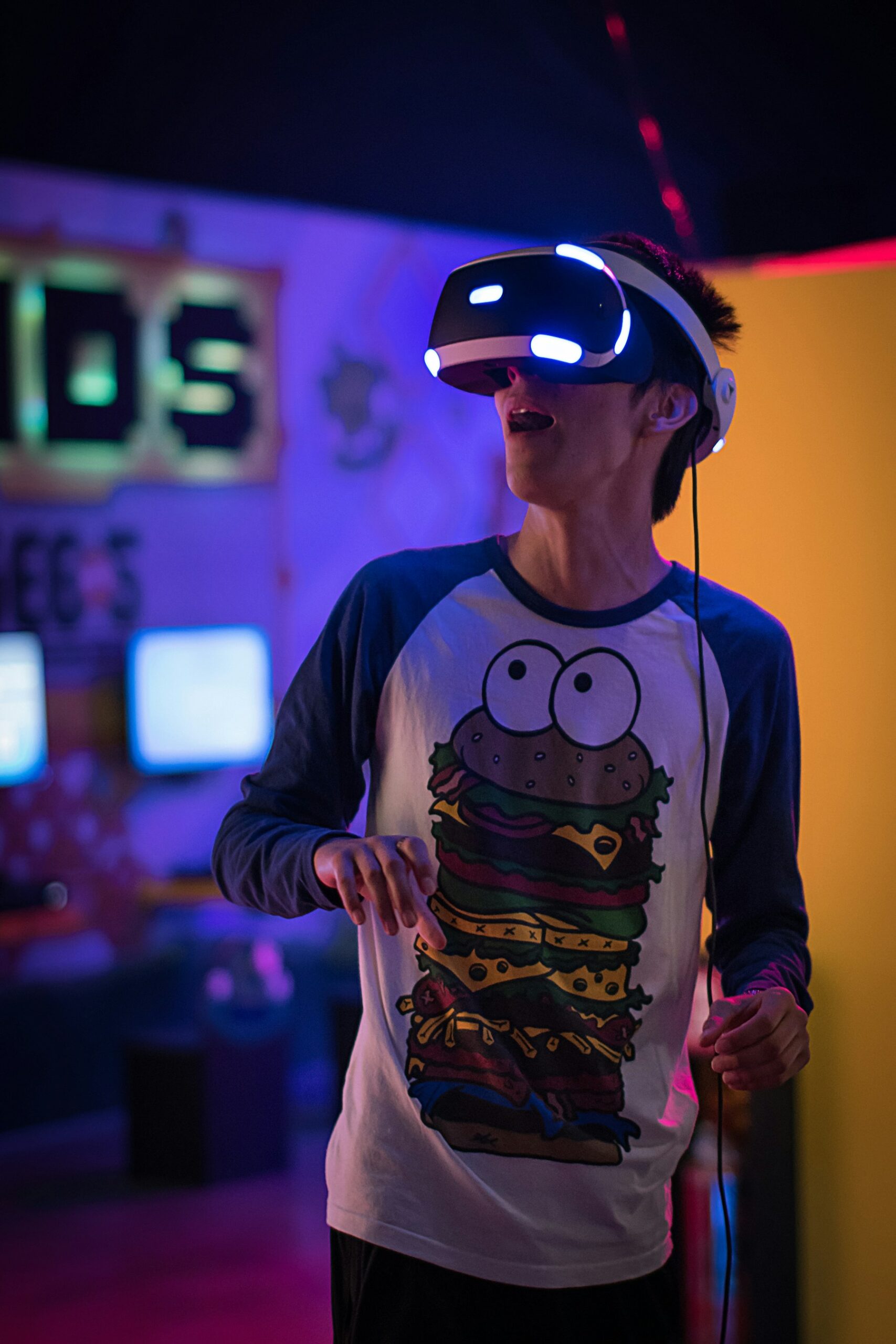
For decades, museums were understood as places to preserve objects and organize collections. In 2026, part of the digital-art field invites us to see them differently: as environments that process information, respond to visitors, and turn architecture into an expressive medium. Monumental screens, spatial audio, sensors, projection and machine learning are no longer isolated additions but elements of a distinctive exhibition language.
This shift does not mean every gallery should become a technology showcase. The difference between a meaningful installation and a passing spectacle lies in its argument: which data it uses, how the public participates, what emotions it evokes and which questions remain open.
It also changes conservation, authorship and access. A work that evolves over time cannot be archived in the same way as a painting; a model trained on images requires different documentation from a physical object; and software-dependent environments need maintenance and migration plans.
DATALAND: Los Angeles opens a new chapter
In June 2026, Refik Anadol and Efsun Erkılıç opened DATALAND in Los Angeles, an institution its founders describe as a museum of AI arts. According to information published by Epson in September, it covers roughly 25,000 square feet across five galleries. Its principal space uses 84 synchronized laser projectors to create a large-scale immersive environment.
The inaugural exhibition, “Machine Dreams: Rainforest,” combines an AI model developed from extensive collections of nature-related material with audiovisual and sensory experiences. It suggests a compelling tension: data from the living world creates a space that is not a real rainforest, but a computational interpretation of one.
The point is not simply the power of the projections. It is an institution that makes technological processes central to the cultural story. The challenge is to show that multisensory experiences can also create understanding and reflection.
Beyond the generated image
It is easy to mistake AI art for writing a prompt and receiving an image. That is one technique, but only one part of a much larger field. Digital art includes data-driven creation, algorithmic composition, generative design, interactive worlds, creative coding, extended reality and installations that react to their surroundings.
The artist’s contribution lies in choosing sources, designing rules, staging an experience and establishing a relationship with an audience. A model is a medium, not a sufficient explanation of the work. We should also ask who contributed the original data, what permissions exist and which curatorial choices guide the project.
Clear editorial documentation therefore matters: explaining the concept and distinguishing generated, recorded and edited material prevents the technology from becoming a decorative black box.
Architecture beyond the walls
An immersive installation is designed as a complete environment. Screen orientation, sound intensity, circulation, light thresholds and the time people spend in a room determine the experience as much as the images. Digital architecture engages the body: visitors move within a composition rather than looking at a single object.
This principle can also transform heritage sites, public space, cultural centers and traveling exhibitions. But it requires care: managing energy use, limiting unnecessary stroboscopic effects, providing accessible routes and offering alternatives for people who do not want intense sensory experiences.
Projecting spectacular visuals onto a façade is not enough. Interventions need a meaningful connection with place, history and community; otherwise architecture becomes a generic backdrop.
The visitor as participant and data source
Experiences using sensors or wearable devices add an ethical layer. What happens to the information visitors produce while taking part? Is it stored? Is it used to personalize the installation? Can someone participate without sharing personal information?
A responsible system should explain its mechanisms in plain language, minimize data collection and distinguish voluntary input from unnecessary tracking. Privacy is not separate from art; it is part of experience design.
The curatorial question matters, too. A work does not become participatory simply because it reacts to a hand gesture. Genuine participation can include interpretation, co-creation and the opportunity to understand or challenge the system.
Who is the author when a machine participates?
There is no one-line answer to authorship. Artists, engineers, archivists, photographers, sound designers, projection technicians and machine-learning systems may all contribute to a work. Recognizing that network does not reduce the artist’s role; it makes the work and its responsibilities easier to describe.
There are also unresolved questions about rights and data provenance, particularly when cultural collections, online imagery or community records are used. Licensing and consent should be considered from the outset rather than treated as a footnote.
Transparency can itself become part of the aesthetic. Revealing a dataset’s origin or showing how a representation changes invites visitors to see not only the result but the process behind it.
Latin America and connected cultural opportunities
In Latin America, digital-art experiences can connect museums, universities, cultural centers, civic laboratories and local communities. There is potential to work with heritage, language, sound, mapping and archives—provided communities help define the projects.
The barriers are substantial: funding, stable electricity, connectivity, equipment, conservation and interdisciplinary training. Scalable projects may be more sustainable than relying entirely on imported monumental installations.
An exhibition might begin with a modest projection, an accessible sound archive or a participatory website. Success is not measured by screen size, but by the quality of the experience and its ability to foster lasting relationships.
What comes after wonder
The defining question of November 2026 is no longer whether machines can produce beautiful images. They can. The real question is which new forms of sensitivity, research and cultural dialogue we can build from that possibility.
The most enduring projects will combine artistic vision, curatorial judgment, responsible infrastructure and human collaboration. Those that document processes, respect sources and prioritize accessibility are more likely to survive beyond the exhibition calendar.
Digital art matures when it stops proving that the technology works and starts explaining why using it is worthwhile.
Sources and further reading
- Refik Anadol Studio — News — noticias y proyectos de 2026
- Epson — Powering DATALAND — 30 de septiembre de 2026; infraestructura de proyección
- The New Yorker — Refik Anadol and AI art — 25 de junio de 2026; contexto crítico
- WIRED — DATALAND experiential gallery — 10 de julio de 2026; experiencia y debate
- MoMA — Refik Anadol: Unsupervised — antecedente museístico, no exposición de 2026
Research and editorial production: Link Comunica. Illustrative photographs sourced via Unsplash. This feature distinguishes documented facts, vendor announcements and editorial analysis.