
Library / Cristian Álvarez
Artificial Intelligence
History, Applications and Future
A reading route through where AI came from, how it is used and the decisions it asks us to make.
See formats and availability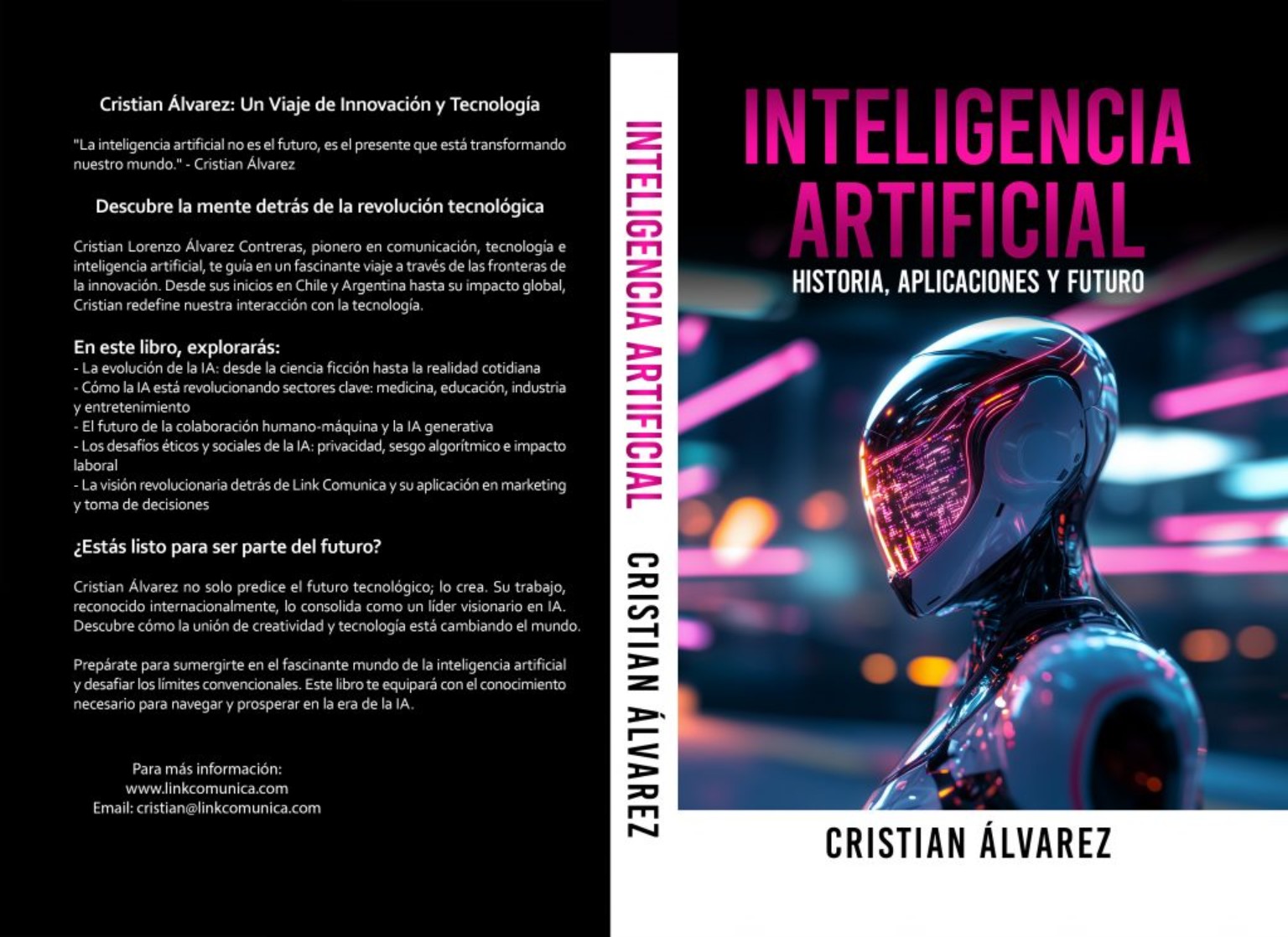
Inside the book
Understand before adopting.
Cristian Álvarez traces the philosophical and mathematical foundations of artificial intelligence and the steps from early simulations to machine learning. The book connects those advances with education, healthcare, communication and work.
Its approach is educational without losing a critical edge: it explains why training data matters, how to recognise limits and bias, and what responsibilities arise when a tool enters human decision-making. It is written for readers who want to take part in the conversation rather than just follow headlines.
Four reading threads
Ideas running through the book.
From Turing to today
A route through foundational questions, early programs and the changes brought by machine learning.
Real applications
Examples in learning, healthcare and cultural production that separate possibility from promise.
Bias and privacy
How source data and design choices shape results that can appear neutral.
Choosing the future
Criteria for evaluating systems, asking for explanations and retaining human oversight.
Editions
Choose how you read.
Store availability, formats and shipping vary by country. Check the listing before ordering.
Check this edition’s availability on Amazon, Kobo or Lulu for your country. Direct purchase links are being verified so we do not send you to the wrong listing.
Ask about this book ↗Amazon and other bookstores: availability depends on the edition and country; check your local catalogue before ordering.
Another perspective
La Máquina del Vacío
What happens to the body, intimacy and desire when life is translated into data?
Explore another book ↗